
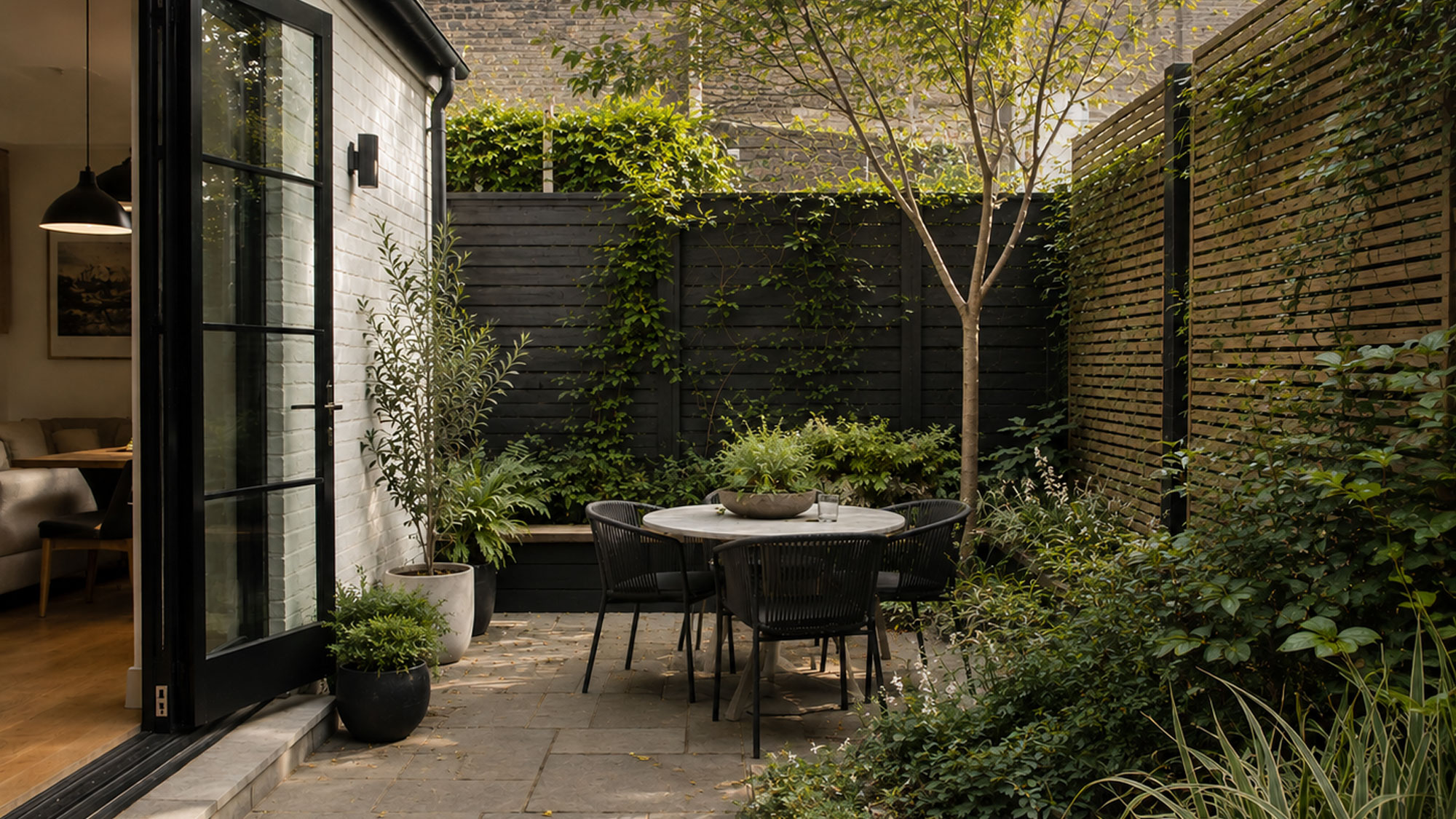
Small but mighty: opportunities, constraints and practical solutions for Sydney courtyard gardens.

Courtyard garden design in Sydney is often shaped by a unique combination of constraints. Limited space, neighbouring buildings, privacy concerns, shade and competing functional requirements can all influence what is realistically achievable within a small footprint.
Many Sydney homeowners assume that courtyard gardens are defined by their limitations. They are often small, overlooked by neighbouring properties, shaded by surrounding buildings and expected to perform multiple functions within a limited footprint. Compared to larger suburban gardens, every square metre must work harder.
However, courtyard gardens can often become some of the most enjoyable and heavily used outdoor spaces in a home. The key is understanding that successful courtyard design is rarely about fitting more into a small area. Instead, it involves balancing competing priorities such as function, privacy, planting, sunlight, maintenance and budget.
The most successful courtyard gardens respond to the conditions of the site and the needs of the people using them.
Every courtyard starts with understanding the site
No two courtyards are exactly alike.
A courtyard that receives full northern sun will present different opportunities from one surrounded by two-storey terraces. A courtyard exposed to prevailing winds may require shelter and screening, while another may struggle with poor drainage or limited planting space.
Before considering plants, paving materials or furniture, it is important to understand the physical characteristics of the site. Factors such as aspect, sunlight, shade, wind exposure, drainage, available soil volume and existing structures will influence almost every design decision.
This is particularly relevant in Sydney’s established suburbs, where courtyards are often inherited spaces shaped by decades of previous alterations and constraints.
Many terraces in Glebe and Newtown contain narrow rear courtyards with limited direct sunlight. Homes in Paddington may have small paved spaces overlooked by neighbouring properties. Semi-detached homes in Annandale and Leichhardt often combine narrow accessways with competing requirements for storage, entertaining and planting.
These conditions are not necessarily problems to overcome. More often, they are the starting point for good design.
Function should drive design decisions

One of the most common mistakes in courtyard design is focusing on appearance before function.
A courtyard may look attractive in a photograph, but if it does not support the way its owners live, it is unlikely to perform well over time.
Before selecting plants or features, it is worth considering how the space will actually be used.
For some households, the priority may be outdoor dining and entertaining. Others may want a quiet place to sit with a coffee, a safe space for pets, room for drying clothes, bicycle storage or a practical connection between different parts of the property.
In smaller spaces, these requirements often compete with one another.
A large dining setting may reduce planting opportunities. Dense screening may improve privacy but limit circulation. Additional storage may reduce usable outdoor space.
Good courtyard design involves identifying which functions matter most and allocating space accordingly. This process often requires trade-offs, but it usually produces more useful outcomes than attempting to accommodate every possible use equally.

Making small courtyards feel larger
The actual size of a courtyard is only part of the story.

Perceived space can have just as much influence on how a garden feels and functions.
Some courtyards feel cramped despite having a reasonable footprint, while others feel surprisingly spacious. The difference often comes down to how space is organised and experienced.
Visual clutter is a common issue. A collection of unrelated pots, materials, furniture and decorative elements can make a courtyard feel smaller than it is. Simplifying materials and reducing unnecessary features can often improve both usability and visual clarity.
Sightlines also play an important role. Allowing views through and beyond the garden can create a stronger sense of depth. Borrowed views from neighbouring trees, distant landscapes or the sky can make a small courtyard feel more expansive.
Vertical space is another valuable resource. In compact gardens, climbing plants, screens and carefully positioned trees can introduce greenery without consuming large amounts of ground area.
Tree canopy can be particularly effective. A small tree often contributes more to the perception of a garden than multiple dense shrubs occupying the same footprint. It introduces scale, creates overhead enclosure and draws the eye upward while also contributing shade and privacy.
These techniques do not increase the physical size of a courtyard, but they can significantly influence how the space is experienced.
Privacy, light and planting often compete
Privacy is one of the most common concerns in Sydney courtyard gardens.
Overlooking from neighbouring properties can make outdoor spaces feel exposed, particularly in higher-density suburbs where houses are positioned close together.
There are many ways to improve privacy, including screening plants, feature trees, slatted screens, climbers and green walls. The challenge is that privacy measures often affect other aspects of the garden.
A dense screen may block unwanted views, but it can also reduce sunlight and airflow. Tall planting can create enclosure, but it may make a small courtyard feel confined. Fast-growing screening plants may provide quick results but often require ongoing maintenance.
As a result, privacy is rarely an isolated design problem.
Instead, it must be balanced against light, ventilation, maintenance and spatial quality. The most successful solutions usually address several requirements simultaneously rather than focusing on a single objective.
What actually works in Sydney courtyard gardens?
While every site is different, certain approaches consistently perform well in small urban spaces.

These include:
- Designing spaces around one or two primary functions rather than many competing uses.
- Using a restrained material palette to reduce visual clutter.
- Incorporating a carefully selected feature tree to provide scale and structure.
- Layering planting vertically through climbers, screens and understorey planting.
- Preserving access and circulation routes.
- Balancing privacy measures with the need for sunlight and airflow.
- Selecting plants that suit the site’s long-term growing conditions rather than short-term visual impact.
These principles are not universal solutions, but they often provide a strong foundation for courtyard garden design in Sydney.
Choosing plants for Sydney courtyard gardens
Plant selection is often one of the first things homeowners think about, but it is generally more effective to consider planting after the broader design framework has been established.
The most appropriate plants will depend on the conditions available.
Shade levels, wind exposure, available soil volume, irrigation opportunities and maintenance expectations all influence what is likely to perform successfully over time.
This is particularly important in courtyards, where growing conditions can vary dramatically. A narrow south-facing courtyard may receive only limited direct sunlight, while a paved north-facing courtyard can become intensely hot during summer.
Trees deserve particular consideration in small spaces.
A carefully selected tree can provide structure, seasonal interest, shade, habitat and a sense of scale. However, trees also require adequate root space and should be selected with mature size and proximity to buildings in mind.
Similarly, densely planting every available area may create an immediate sense of lushness, but it can also increase maintenance requirements and reduce usability as plants mature.
Long-term performance is often a better guide than short-term impact.
A garden that functions well five or ten years after installation is generally more successful than one that simply looks full on completion day.
The most successful courtyards balance trade-offs
Courtyard garden design in Sydney is ultimately an exercise in balancing competing priorities.
Most projects involve decisions between privacy and light, planting and usable space, density and maintenance, shade and winter solar access, or features and flexibility.
There is rarely a perfect solution that maximises every objective simultaneously.
Instead, successful courtyard gardens are usually the result of understanding priorities, recognising constraints and making deliberate decisions about where compromises should occur.
This is particularly true in Sydney’s established urban areas, where limited space often magnifies the consequences of every design choice.
When design decisions respond thoughtfully to both the site and the people who use it, even relatively small courtyards can become highly functional, comfortable and enjoyable outdoor environments.

Wrap up
Courtyard gardens may be small, but they often require some of the most careful planning.
Limited space, neighbouring properties, shade, access restrictions and competing functional requirements all influence the final outcome. At the same time, these constraints often create opportunities for thoughtful and highly considered design responses.
The most successful Sydney courtyard gardens are not necessarily those with the most plants, features or decorative elements. They are the gardens that respond appropriately to their site, support everyday life and continue to perform well over time.
Understanding the constraints, opportunities and trade-offs involved is often the first step towards making better decisions about what a courtyard garden can realistically become.
Frequently asked questions
What is the best layout for a small courtyard garden?
The best layout depends on how the space will be used. Most successful courtyards prioritise one or two primary functions and organise planting, circulation and seating around those priorities.
How do you make a courtyard garden feel larger?
Reducing visual clutter, simplifying materials, using vertical planting and creating longer sightlines can help a courtyard feel more spacious.
What plants work best in Sydney courtyard gardens?
Plant selection depends on sunlight, soil volume, wind exposure and maintenance expectations. A site-specific approach is generally more successful than choosing plants based on appearance alone.
Can trees be used in small courtyards?
Yes. A carefully selected tree can provide structure, shade and scale, provided adequate root space and mature size are considered.
How do you improve privacy in a courtyard garden?
Privacy can be improved through screening plants, feature trees, climbers and built structures. Successful solutions balance privacy with sunlight, airflow and maintenance requirements.
Considering a courtyard garden project?
Every courtyard presents a different combination of opportunities and constraints. Understanding sunlight, privacy, access, planting space and intended use can help clarify what is realistically achievable before significant money is invested.
A design consultation can help identify priorities, evaluate options and develop a response that is appropriate to both the site and the way the space will be used.

Speak with one of our team about your courtyard garden design project today